
About Me
Hi there! I’m Onur Keleş, a PhD student in the Department of Linguistics at Boğaziçi University, Istanbul, and an IMPRS affiliate at the Max Planck Institute for Psycholinguistics, Nijmegen. I hold an M.A. (GPA: 4.0) and B.A. Summa Cum Laude (GPA: 4.0) from Boğaziçi University.
My research sits at the intersection of cognitive science and NLP, investigating how visual-spatial modality shapes language in deaf signers, hearing gesture users, and vision–language models. I work with Dr. Kadir Gökgöz and Dr. Nazik Dinçtopal Deniz at Boğaziçi, and collaborate with Dr. Aslı Özyürek and Dr. Esam Ghaleb at MPI.
News
- Apr 2026Paper accepted at ACL 2026 (Main): The Visual Iconicity Challenge — evaluating VLMs on sign language form–meaning mapping. [Paper] [arXiv]
- Mar 2026Two poster presentations at HSP 2026 (Boston, US): agentive iconicity in VLMs [Abstract] & NPI processing in L2 Turkish [Poster].
- Oct 2025Book chapter published in Empirical Insights into Language and Cognition (Nobel Akademik Yayıncılık). [PDF]
- Sep 2025Invited talk at Max Planck Institute for Psycholinguistics: Iconicity in visual communication: From silent gestures and signs to vision–language models. [Slides]
- Sep 2025Two poster presentations at AMLaP 2025 (Prague): L2 thematic role processing [Poster] & task effects in good-enough parsing [Poster].
- May 2025Two papers at NAACL 2025 workshops: good-enough parsing with LLMs [CMCL] and Hamshentsnag NLP [LM4UC].
- Mar 2025Poster presentation at HSP 2025 (Maryland, US): pragmatics predicts phonetic reduction in TİD narratives. [Poster]
Selected Publications


Reference Tracking Strategies of Deaf Adult Signers in Turkish Sign Language

Effects of Age of Acquisition and Category Size on Signed Verbal Fluency
Work in Progress
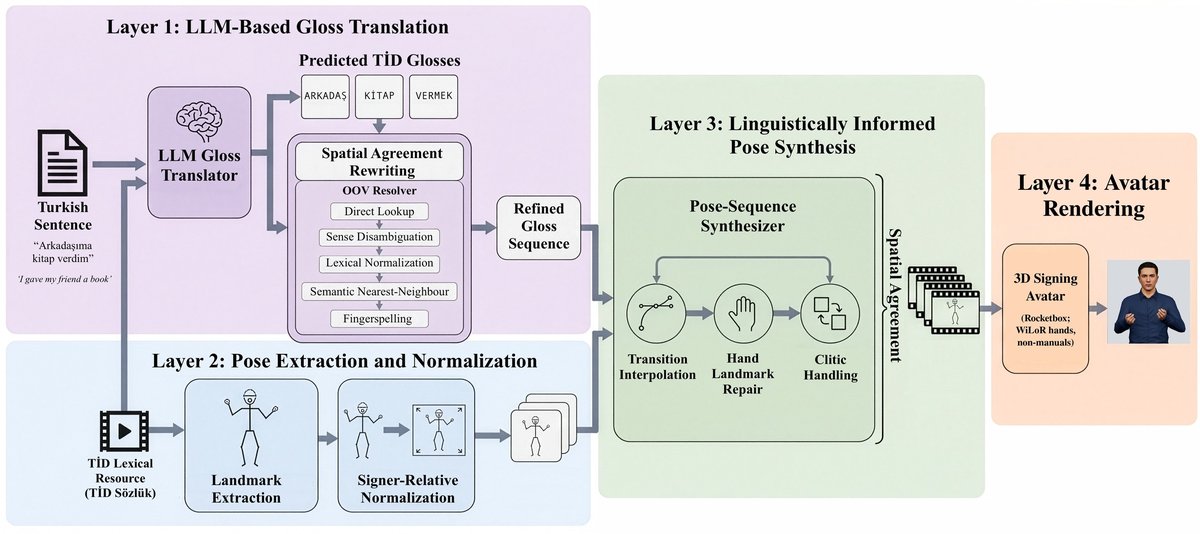
Sign language generation for Turkish Sign Language with LLMs
A modular pipeline that turns Turkish text into Turkish Sign Language (TİD): LLMs translate Turkish into TİD glosses, linguistic modules handle spatial agreement and unknown or ambiguous glosses, and dictionary clips are stitched into poses that drive a 3D avatar. Larger fine-tuned open LLMs outperform prompted closed models on BLEU, chrF, and ROUGE, and Deaf and expert signers evaluate the resulting videos.
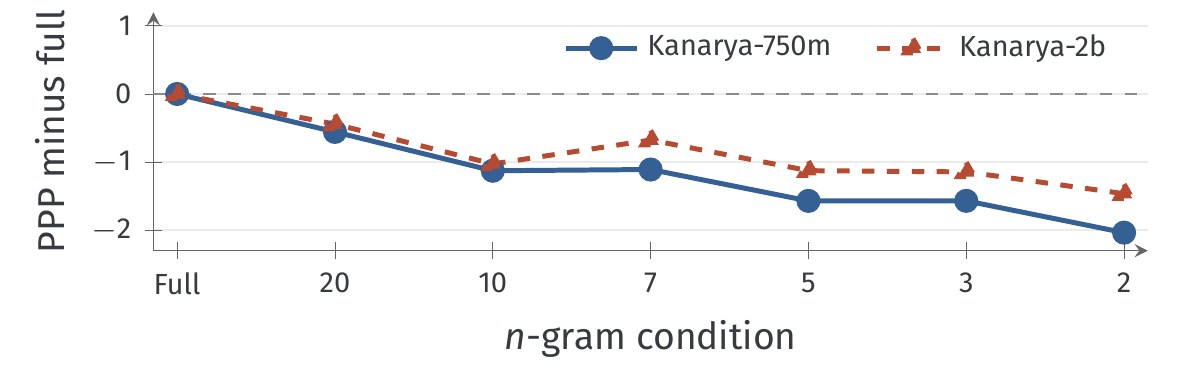
Interaction of Model Size, Context Length and Text Genre on Turkish Language Models' Prediction of Human Reading
Using the Turkish MultiplEYE eye-tracking data (57 readers, 10 passages from four genres), we test how context length, model size, and text genre shape how well language-model surprisal explains reading. Full preceding context fit reading times best, and the smaller Kanarya model (750M) fit better than the larger one (2B), most clearly for rare words. Readers re-read institutional texts the most but understood all genres equally well, and readers whose later reading times tracked surprisal more closely answered more comprehension questions correctly.
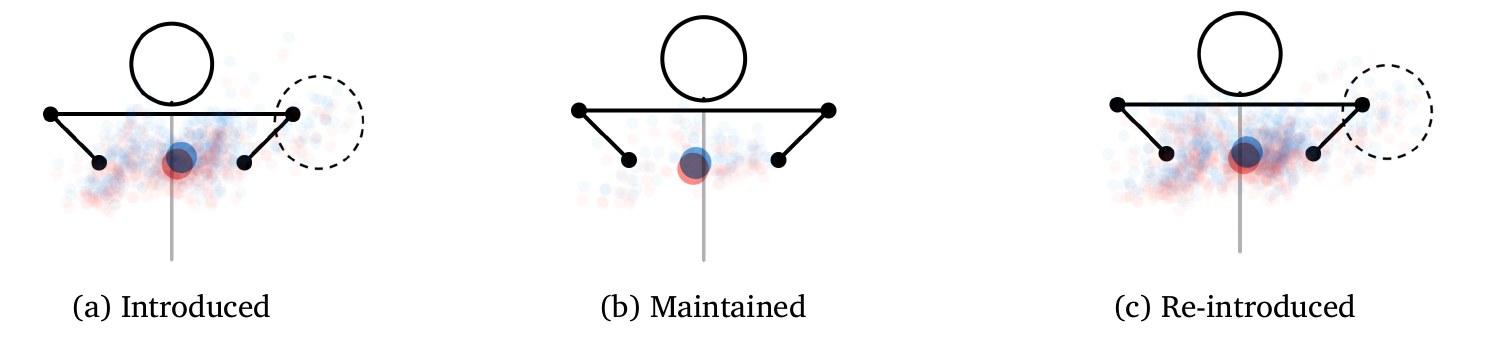
Phonetic reduction and referential accessibility in Turkish Sign Language
Using pose estimation on narratives from 28 deaf signers, we ask whether discourse context shapes how signs are articulated. Signs that introduce a referent are longer, move more, and use more signing space than later mentions, and they shrink gradually as the referent becomes more accessible.